lung-page

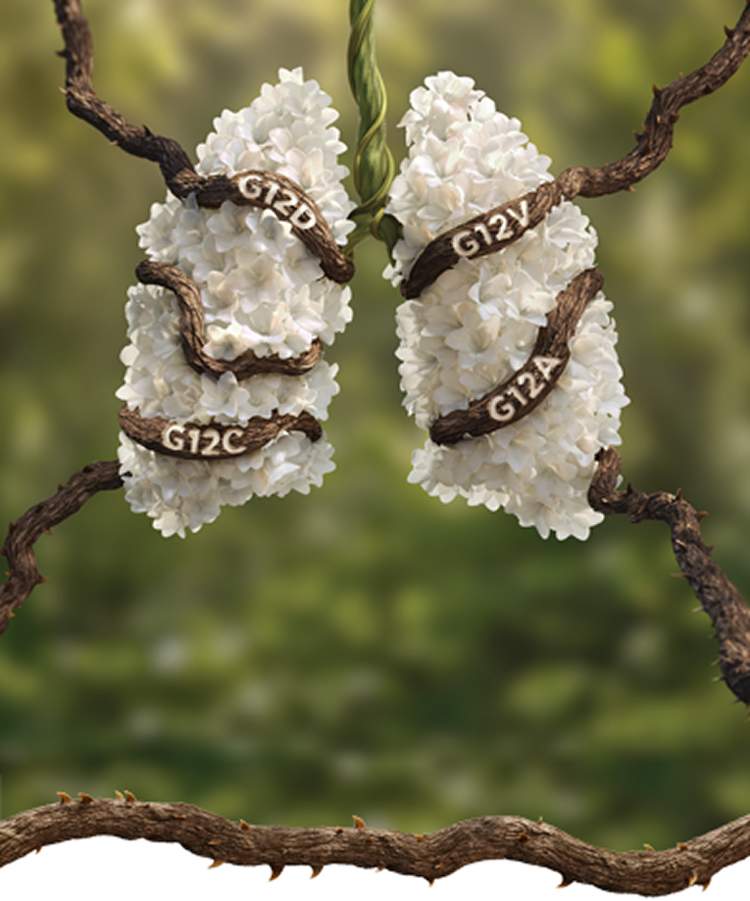
Illustration of lungs formed from flower petals entwined with vines that are etched with G12D, G12C, G12V, and G12A. Headline reads “In NSCLC, it is time to look closer at the grip of RAS.”
In NSCLC
It is time to look closer
at the grip of RAS
SCROLL
30
mobile-14
styled-text
HOW PREVALENT ARE RAS MUTATIONS IN NSCLC?
font-mobile-size-20
margin-top-none
margin-bottom-md
mobile-margin-bottom-20
text-color-green
styled-text
RAS mutations are the most common oncogenic driver in NSCLC1*
font-mobile-size-30
margin-bottom-md
mobile-margin-bottom-20
text-color-brown-533405
styled-text
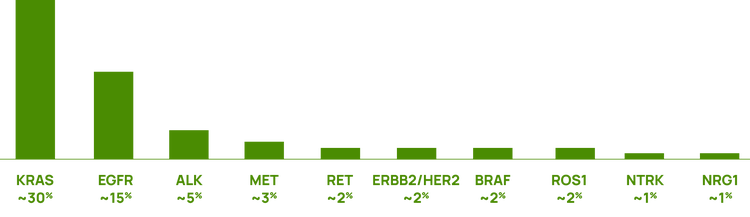
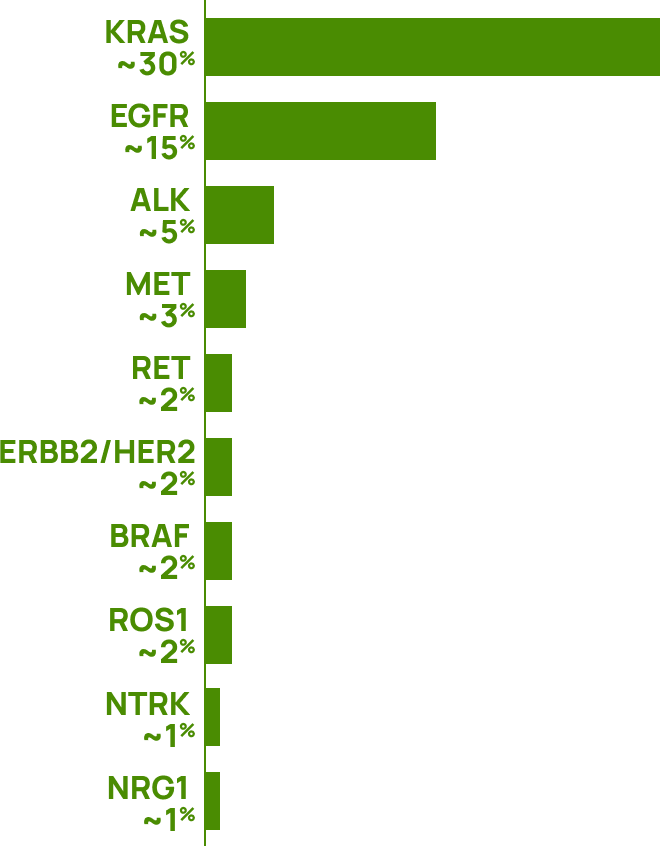
- In NSCLC, KRAS is the most commonly mutated isoform in the RAS gene family2
- KRAS mutations occur in ~30% of NSCLC, which is about double the prevalence of EGFR mutations, the next most common genetic driver in NSCLC1*
- KRAS mutations are typically mutually exclusive of other known driver mutations in NSCLC2
margin-bottom-xl
mobile-margin-bottom-20
text-color-90-black
styled-text
Common driver mutations in NSCLC1†
font-desktop-size-22
font-mobile-size-20
margin-top-none
margin-bottom-sm
mobile-margin-bottom-20
text-color-brown-533405
styled-text
†Prevalence varies between different datasets and studies.
margin-top-sm
margin-bottom-xl
mobile-margin-top-20
mobile-margin-bottom-30
text-color-near-black
styled-text
*Prevalence varies by region. In the United States and Europe, KRAS mutations are the most frequent driver of NSCLC, whereas in Asia, EGFR mutations are the most common driver mutations.4
margin-top-lg
margin-bottom-xxl
mobile-margin-top-15
mobile-margin-bottom-40
text-color-near-black


24
mobile-14
styled-text
WHY IS IT IMPORTANT TO IDENTIFY SPECIFIC RAS MUTATIONS IN NSCLC?
font-mobile-size-20
margin-top-none
margin-bottom-md
mobile-margin-bottom-30
text-color-green
styled-text
Not all RAS mutations are the same in NSCLC5
font-mobile-size-30
margin-bottom-md
mobile-margin-bottom-25
text-color-brown-533405
styled-text
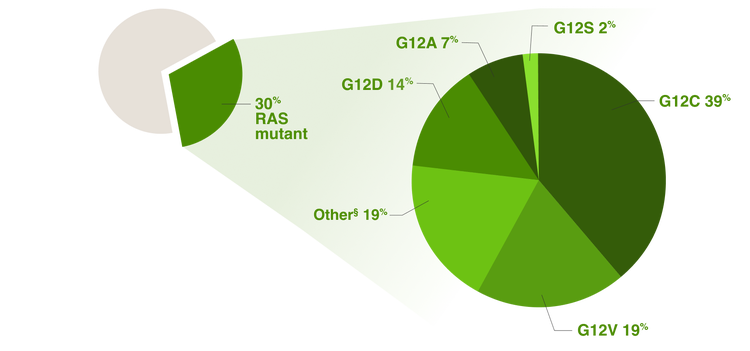
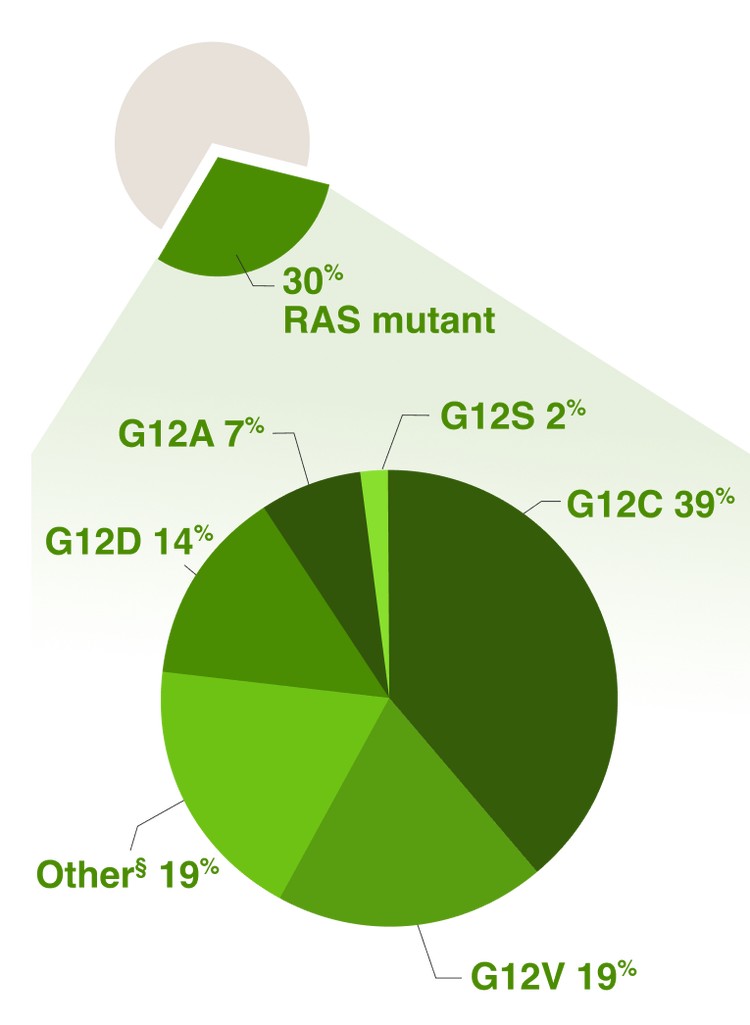
- KRAS G12V, G12D, and G12A account for ~40% of all RAS mutations in NSCLC6
font-desktop-size-20
font-mobile-size-16
margin-bottom-md
mobile-margin-bottom-30
text-color-90-black
styled-text
RAS mutations in NSCLC6‡
font-desktop-size-22
font-mobile-size-20
margin-top-none
margin-bottom-lg
mobile-margin-top-none
mobile-margin-bottom-none
text-color-brown-533405
font-weight-800
styled-text
‡Numbers are approximate.
margin-top-xs
mobile-margin-top-20
text-color-85-black
styled-text
§Other includes additional codon 12, codon 13, and codon 61 mutations.6
margin-bottom-xxl
mobile-margin-bottom-30
text-color-85-black
styled-text
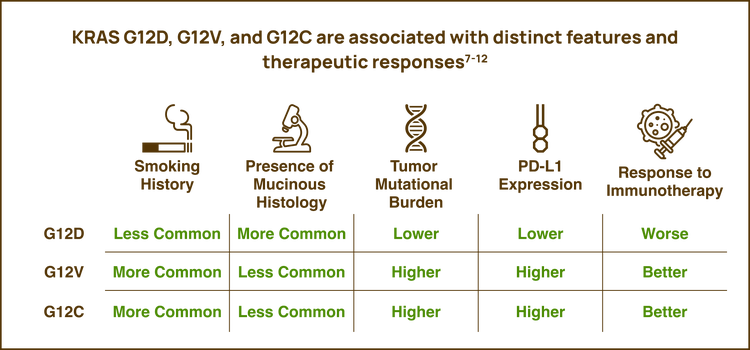
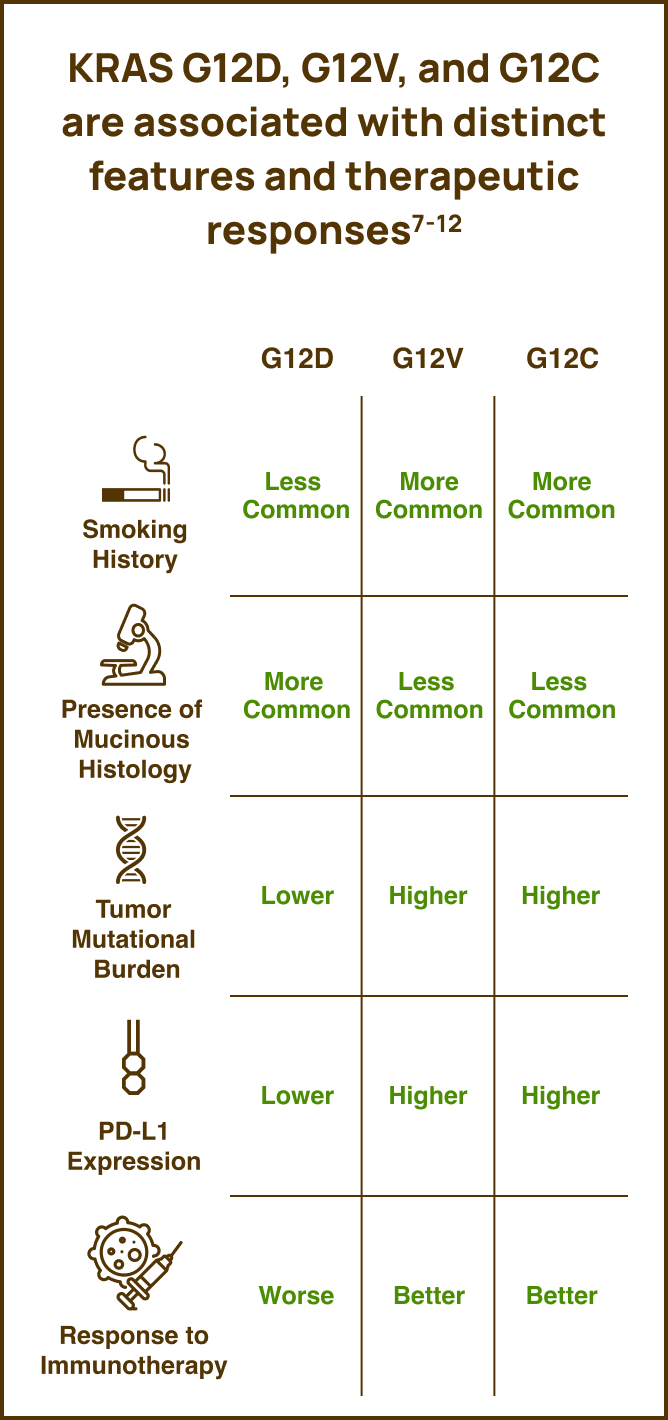
- KRAS G12D is associated with less favorable responses to immunotherapy8,11
font-desktop-size-20
font-mobile-size-16
margin-top-lg
margin-bottom-sm
mobile-margin-top-30
mobile-margin-bottom-35
text-color-90-black
styled-text
- KRAS G12V generally resembles KRAS G12C in biological features and responses to immunotherapy, but displays more variability7,13-15
font-desktop-size-20
font-mobile-size-16
margin-top-none
margin-bottom-xl
mobile-margin-top-none
mobile-margin-bottom-30
text-color-90-black
styled-text
margin-bottom-xxl
mobile-margin-bottom-35
text-color-90-black
24
mobile-14
styled-text
WHAT IS THE ROLE OF RAS(ON) IN DRIVING NSCLC?
font-mobile-size-20
margin-top-none
margin-bottom-md
mobile-margin-bottom-20
text-color-green
styled-text
Excessive RAS(ON) signaling promotes the development and progression of RAS-driven cancers16,17
font-mobile-size-30
margin-top-none
margin-bottom-md
mobile-margin-bottom-20
text-color-brown-533405
styled-text
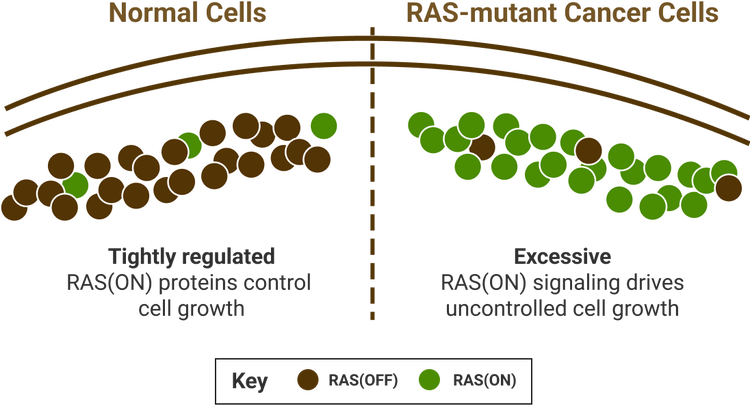
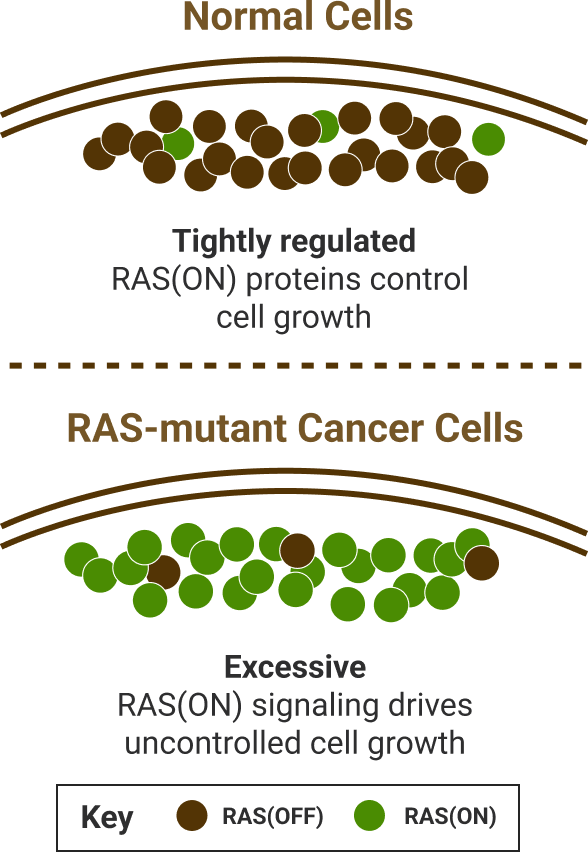
- RAS proteins regulate cell growth by switching between the active RAS(ON) and inactive RAS(OFF) states16
- RAS(ON) promotes cell growth and survival in response to growth signals16,18
- When RAS is mutated, it remains mostly in the ON state, resulting in overactive RAS signaling and uncontrolled cell growth16
margin-top-md
margin-bottom-md
mobile-margin-bottom-30
text-color-90-black
size-large
styled-text
margin-bottom-xxl
mobile-margin-bottom-40
text-color-90-black
50
22
mobile-14
styled-text
WHAT ARE THE UNMET NEEDS IN RAS-MUTATED NSCLC?
font-mobile-size-20
margin-bottom-md
mobile-margin-top-none
mobile-margin-bottom-20
text-color-green
styled-text
Although advances have been made, challenges in treating RAS-driven NSCLC persist3,5
font-mobile-size-30
margin-bottom-lg
mobile-margin-bottom-20
text-color-brown-533405
styled-text
RAS-driven NSCLC tumors are often characterized by rapid tumor growth and cancer spread1,19
font-desktop-size-22
font-mobile-size-20
margin-top-none
margin-bottom-lg
mobile-margin-bottom-30
text-color-green
styled-text
- RAS-driven NSCLC confers worse treatment outcomes than wild-type RAS NSCLC20,21
- Patients with KRAS G12D–mutated NSCLC typically have less favorable response to current standard-of-care treatments, compared with patients with KRAS G12C or G12V mutations8,11
margin-top-md
margin-bottom-xxl
mobile-margin-bottom-40
text-color-90-black
styled-text
Currently, there is no approved RAS-targeted treatment for many patients with RAS-mutated NSCLC3,6
font-desktop-size-22
font-mobile-size-20
margin-top-sm
margin-bottom-none
mobile-margin-top-15
mobile-margin-bottom-20
text-color-green
font-weight-800

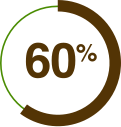
About 60% of patients with RAS-mutated NSCLC have non–KRAS G12C tumors, including G12D, G12V, or G12A, and are therefore ineligible for approved RAS-targeted therapies.3,6


Chemotherapy and immunotherapy are the current standards of care for the majority of patients with RAS-mutated NSCLC, but do not target the mutation likely driving the disease.1,18,22
28
mobile-14
20
styled-text
Explore potential approaches to targeting more of the RAS mutations that drive NSCLC
font-mobile-size-30
margin-top-sm
margin-bottom-md
mobile-margin-bottom-20
text-color-green
28
mobile-4
styled-text
ALK=anaplastic lymphoma kinase; BRAF=B-Raf proto-oncogene, serine/threonine kinase; EGFR=epidermal growth factor receptor; ERBB2=erythroblastic oncogene B receptor tyrosine kinase 2; HER2=human epidermal growth factor receptor 2; KRAS=Kirsten rat sarcoma; MET=mesenchymal-epithelial transition; NRG1=neuregulin 1; NSCLC=non-small cell lung cancer; NTRK=neurotrophic tyrosine receptor kinase; PD-L1=programmed death-ligand 1; RAS=rat sarcoma; RET=ret proto-oncogene protein; ROS1=ROS proto-oncogene 1, receptor tyrosine kinase.
margin-bottom-md
text-color-90-black
styled-text
References: 1. Spagnuolo A, Maione P, Gridelli C. The treatment of advanced non-small cell lung cancer harboring KRAS mutation: a new class of drugs for an old target—a narrative review. Transl Lung Cancer Res. 2022;11(6):1199-1216. doi:10.21037/tlcr-21-948 2. Reita D, Pabst L, Pencreach E, et al. Direct targeting KRAS mutation in non-small cell lung cancer: focus on resistance. Cancers (Basel). 2022;14(5):1321. doi:10.3390/cancers14051321 3. Frisch A, Martin E, Kim SY, Riess JW, Sen T, Karim N. KRAS mutated NSCLC: past, present, and future directions in a rapidly evolving landscape. Oncologist. 2025;30(6):oyaf153. doi:10.1093/oncolo/oyaf153 4. Laguna JC, García-Pardo M, Alessi J, et al. Geographic differences in lung cancer: focus on carcinogens, genetic predisposition, and molecular epidemiology. Ther Adv Med Oncol. 2024;16:17588359241231260. doi:10.1177/17588359241231260 5. Reck M, Carbone DP, Garassino M, Barlesi F. Targeting KRAS in non-small-cell lung cancer: recent progress and new approaches. Ann Oncol. 2021;32(9):1101-1110. doi:10.1016/j.annonc.2021.06.001 6. Data on file. Revolution Medicines, Inc.; 2025. 7. Sun L, Zhou Y, Handorf EA, Borghaei H, Bauman J, Aggarwal C. Brief report: not created equal: survival differences by KRAS mutation subtype in NSCLC treated with immunotherapy. JTO Clin Res Rep. 2024;6(1):100755. doi:10.1016/j.jtocrr.2024.100755 8. Ricciuti B, Alessi JV, Elkrief A, et al. Dissecting the clinicopathologic, genomic, and immunophenotypic correlates of KRASG12D-mutated non-small-cell lung cancer. Ann Oncol. 2022;33(10):1029-1040. doi:10.1016/ j.annonc.2022.07.005 9. Di Federico A, Hong L, Elkrief A, et al. Lung adenocarcinomas with mucinous histology: clinical, genomic, and immune microenvironment characterization and outcomes to immunotherapy-based treatments and KRASG12C inhibitors. Ann Oncol. 2025;36(3):297-308. doi:10.1016/j.annonc.2024.11.014 10. Shim HS, Kenudson M, Zheng Z, et al. Unique genetic and survival characteristics of invasive mucinous adenocarcinoma of the lung. J Thorac Oncol. 2015;10(8):1156-1162. doi:10.1097/JTO.0000000000000579 11. Zhao R, Shu Y, Xu W, et al. The efficacy of immunotherapy in non-small cell lung cancer with KRAS mutation: a systematic review and meta-analysis. Cancer Cell Int. 2024;24(1):361. doi:10.1186/s12935-024-03498-9 12. Gu G, Liu C, Zhu X, et al. Clinical characteristics of KRAS mutation subtypes in non-small cell lung cancer population in Xinjiang, China, and their impact on the prognosis of immunotherapy. J Cancer Res Clin Oncol. 2024;150(9):413. doi:10.1007/s00432-024-05932-x 13. Tamiya Y, Matsumoto S, Zenke Y, et al. Large-scale clinico-genomic profile of non-small cell lung cancer with KRAS G12C: results from LC-SCRUM-Asia study. Lung Cancer. 2023;176:103-111. doi:10.1016/j.lungcan.2022.12.019 14. Zhao D, Li H, Mambetsariev I, et al. Clinical and molecular features of KRAS-mutated lung cancer patients treated with immune checkpoint inhibitors. Cancers (Basel). 2022;14(19):4933. doi:10.3390/cancers14194933 15. Eklund EA, Sayin SI, Jonsson JS, et al. Monotherapy with immune checkpoint blockade improves survival outcomes in KRAS-mutant but not KRAS wild-type metastatic lung adenocarcinoma: validation from an extended Swedish cohort. JTO Clin Res Rep. 2025;6(10):100880. doi:10.1016/j.jtocrr.2025.100880 16. Lokhandwala J, Smalley TB, Tran TH. Structural perspectives on recent breakthrough efforts toward direct drugging of RAS and acquired resistance. Front Oncol. 2024;14:1394702. doi:10.3389/fonc.2024.1394702 17. Jiang J, Jiang L, Maldonato BJ, et al. Translational and therapeutic evaluation of RAS-GTP inhibition by RMC-6236 in RAS-driven cancers. Cancer Discov. 2024;14(6):994-1017. doi: 10.1158/2159-8290.CD-24-0027 18. Ghazali N, Garassino MC, Leighl NB, Bestvina CM. Immunotherapy in advanced, KRAS G12C-mutant non-small-cell lung cancer: current strategies and future directions. Ther Adv Med Oncol. 2025;17:17588359251323985. doi:10.1177/17588359251323985 19. Uniyal P, Kashyap VK, Behl T, Parashar D, Rawat R. KRAS mutations in cancer: understanding signaling pathways to immune regulation and the potential of immunotherapy. Cancers (Basel). 2025;17(5):785. doi:10.3390/cancers17050785 20. Huang HT, Huang DDR. Beyond PACIFIC: rethinking consolidation in molecularly defined stage III NSCLC. J Thorac Oncol. 2026;21(6):103658. doi:10.1016/j.jtho.2026.103658 21. Eklund EA, Wiel C, Fagman H, et al. KRAS mutations impact clinical outcome in metastatic non-small cell lung cancer. Cancers (Basel). 2022;14(9):2063. doi:10.3390/cancers14092063 22. Bailly C, Thuru X, Quesnel B. Combined cytotoxic chemotherapy and immunotherapy of cancer: modern times. NAR Cancer. 2020;2(1):zcaa002. doi:10.1093/narcan/zcaa002
margin-bottom-lg
text-color-90-black